




Median Annual wage
$66,200

Entry-Level Training Required
High School or Equivalent

Median Hourly wage
$24.93
5-Year Growth Projection
+6% in Minnesota
What is a Solar Installer?
Solar technicians are a crucial part of the clean energy sector. They know the ins and outs of solar science as well as panel construction, installation and repair.
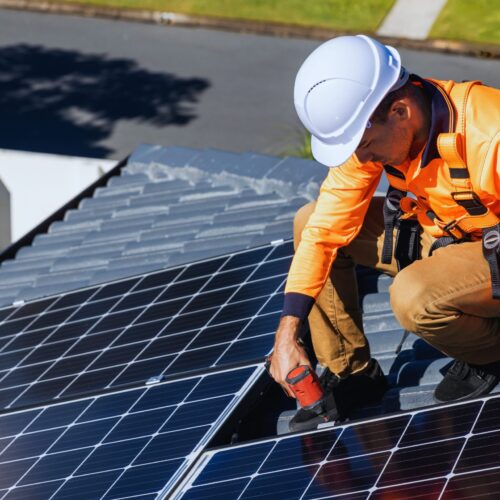
A Solar Installer’s day starts early in the morning, with a quick check of the weather, because a dry, clear day is essential for a safe shift on a roof. After arriving at the job site, the crew gathers for a safety briefing to review the day’s layout, fall-protection plans, and roof hazards, then unloads trucks that may be loaded with with solar modules, racking hardware, electrical gear, or other equipment.
Much of the day is spent navigating rooftops or open fields, carefully securing mounting brackets, hoisting heavy panels into place, and running the wires that connect the whole system together.
Since a Solar Installer is exposed to the elements, they push through intense summer heat or freezing winds, requiring sharp balance and physical stamina to handle equipment safely in challenging settings. When big project deadlines approach, the team works diligently until the final array is locked down, wired up, and passes initial testing. When a Solar Installer heads home from a completed job, they feel a sense of pride, looking back at a freshly completed solar array, knowing they just built a system that will generate clean, renewable energy for decades to come.
A career as a Solar Installer is ideal for someone who doesn’t mind being outside, enjoys hands-on mechanical work, and who takes satisfaction in building, installing, and maintaining equipment.
Most of the duties of a Solar Installer take place outside, and in diverse locations. This career is ideal for someone who appreciates variety and staying active. Every installation presents its own challenges, depending on the type of customer and the size and location of the job. Conversation skills, attention to detail, and perseverance are key to success.
Solar Installers rarely work alone, so it is a perfect career for someone who thrives on working in small teams. It is important to have clear and effective communication with your teammates, your supervisor, and your customers to ensure the safest and most efficient installation possible.
Assess and design solar installations by evaluating sites for solar access, orientation, structural integrity, safety hazards, and customer or electrical requirements.
Install and assemble photovoltaic systems, including mounting solar panels, collectors, support structures, wiring, grounding, and protective equipment in compliance with codes and standards.
Configure and integrate system components such as inverters, controllers, disconnects, and utility connections to ensure proper operation with existing power sources.
Inspect, test, and commission solar systems by activating systems, verifying performance, measuring output, and identifying or correcting installation or performance issues.
Maintain and support solar systems through routine maintenance, performance documentation, and educating users on system operation, start‑up, shutdown, and emergency procedures.
To get started as a Solar Installer in Minnesota, you can build a strong foundation by earning a specialized credential through a Minnesota State technical college, which prepares you for industry-standard certifications like NABCEP. Minnesota law requires the electrical connections of a solar array to be assembled by a licensed electrical contractor or a registered apprentice, so formal technical training makes you highly employable. From there, you can pursue a career as a solar installer. Later, you might consider using your education and experience to pursue the training required to become a fully licensed electrician.

SELECT a college to discover the programs at Minnesota State