



Median Annual wage
$72,800

Entry-Level Training Required
High School or Equivalent

Median Hourly wage
$32.77
5-Year Growth Projection
+7% in Minnesota
What is an Industrial Machinery Mechanic?
An industrial machinery mechanic keeps industrial operations running smoothly by troubleshooting, repairing, and maintaining the complex machines that power production.
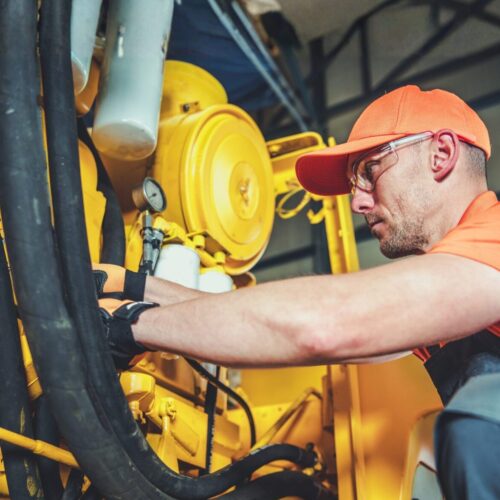
A typical day for an industrial machinery mechanic kicks off around 8AM, as they dive into inspecting equipment, reviewing maintenance logs, and checking for any overnight issues that need quick attention. Mornings are hands‑on and engaging, filled with examining machines for wear, testing components, and diagnosing problems using tools like multimeters, gauges, and diagnostic software. They may jump right into disassembling machine parts to uncover faulty components, replace worn pieces, or make precise adjustments that keep production running smoothly and efficiently.
Later in the day, they tackle scheduled maintenance tasks such as lubricating moving parts, tightening connections, calibrating sensors, and making sure every piece of equipment meets safety and performance standards. Once repairs are complete, they fire up the machinery to ensure everything is running at its best and carefully document their work. The day often wraps up with sharing updates with supervisors or operators, planning ahead for upcoming maintenance needs, and setting the next shift up for success to keep operations flowing without interruption.
An Industrial Machinery Mechanic career could be a great match for you if you’re someone who enjoys working with tools and tackling mechanical challenges. You’ll spend your days diagnosing issues, repairing machinery, and keeping essential equipment running smoothly, which makes the work both purposeful and engaging. If you prefer active, physically involved tasks over a desk job, this role offers plenty of variety and movement.
It is also a great fit for people who like reading technical manuals and figuring out the root cause of equipment problems. Many positions require only a high school diploma plus technical training, making it an accessible path without a long academic commitment.
Skilled mechanics work in manufacturing, processing, and other industrial facilities, and enjoy stable employment and growth opportunities. If you want a practical, reliable career where your skills make an immediate impact, becoming an Industrial Machinery Mechanic could be an excellent choice for you.
Maintain, inspect, and repair industrial machinery, keeping equipment in proper operating condition by replacing or fixing worn, broken, or malfunctioning components.
Diagnose mechanical and electrical problems by observing equipment operation, using diagnostic tools (such as voltmeters), analyzing test results and error messages, and reviewing operator feedback.
Disassemble, repair, and reassemble machinery to access components, perform repairs or fabrication (including cutting or welding), and ensure proper function after reassembly.
Program, test, and verify equipment operation, including entering instructions for computer‑controlled machinery and operating machines to confirm successful repairs.
Document and coordinate maintenance activities, including recording repairs, tracking parts and materials, ordering replacements, demonstrating equipment use to operators, and assisting with maintenance scheduling.
To get started as an Industrial Machinery Mechanic in Minnesota, you can build a strong foundation by earning an Associate of Applied Science (A.A.S.) degree or diploma in industrial mechanics, industrial maintenance, or mechatronics through a Minnesota State technical college. These programs provide vital hands-on experience troubleshooting the heavy hydraulic pumps, pneumatic circuits, and automated conveyor systems found in production plants. Alternatively, you can jump straight into the field by securing a state-registered apprenticeship with a manufacturing employer, allowing you to earn a regular paycheck while completing your structured on-the-job training. Combining technical classroom hours with field experience is the fastest way to achieve top-tier technician status.

SELECT a college to discover the programs at Minnesota State